Yes, travel agents still exist ...
Whether it's your first cruise or you've taken several,
contact Margaret Owen - Cruise Pro
for help in planning your cruise or tour.
And it won't cost more, cruise lines pay for my service,
and you just might get a better rate and extra amenities.
✆: (510) 582-0540
✉:
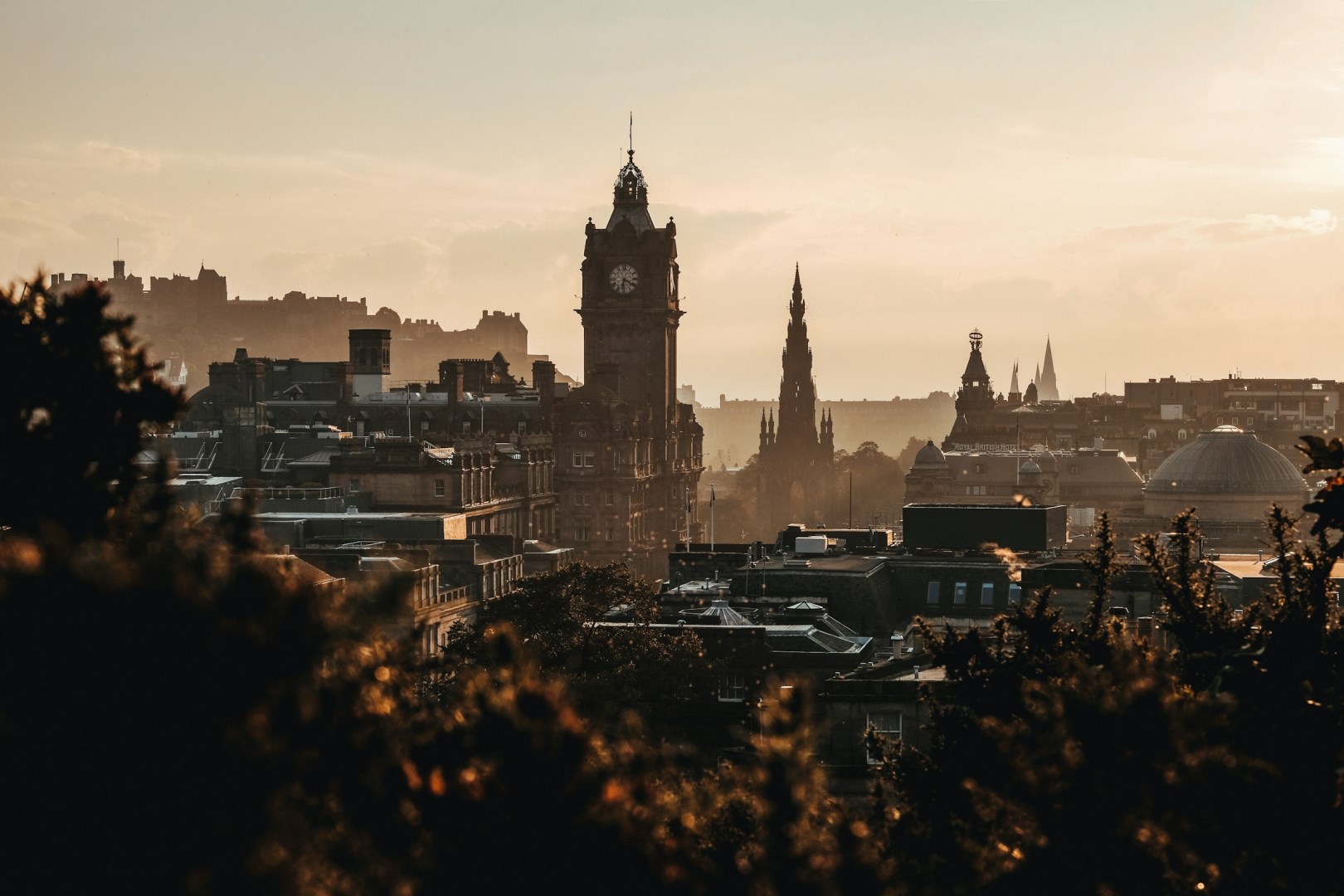
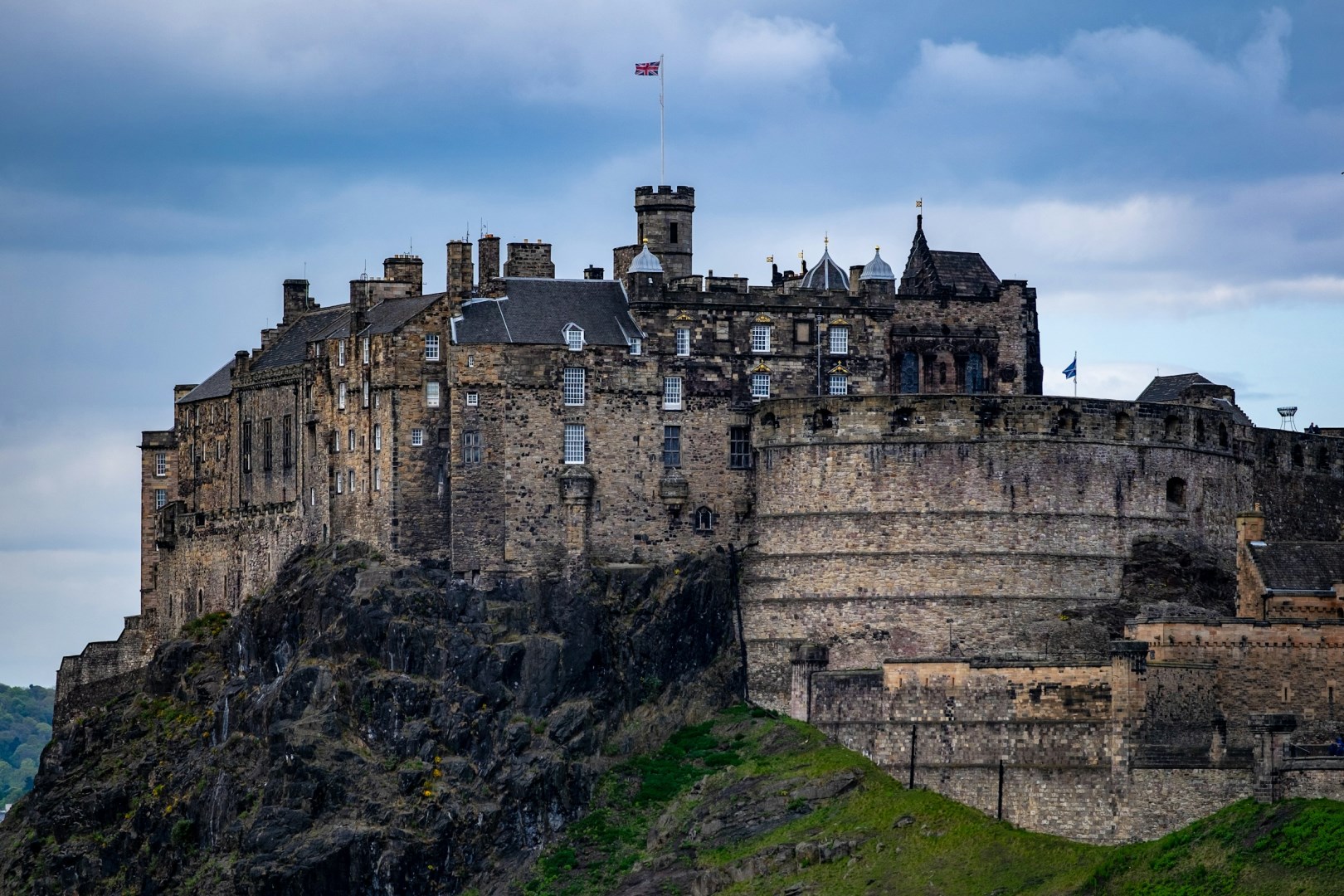
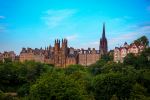
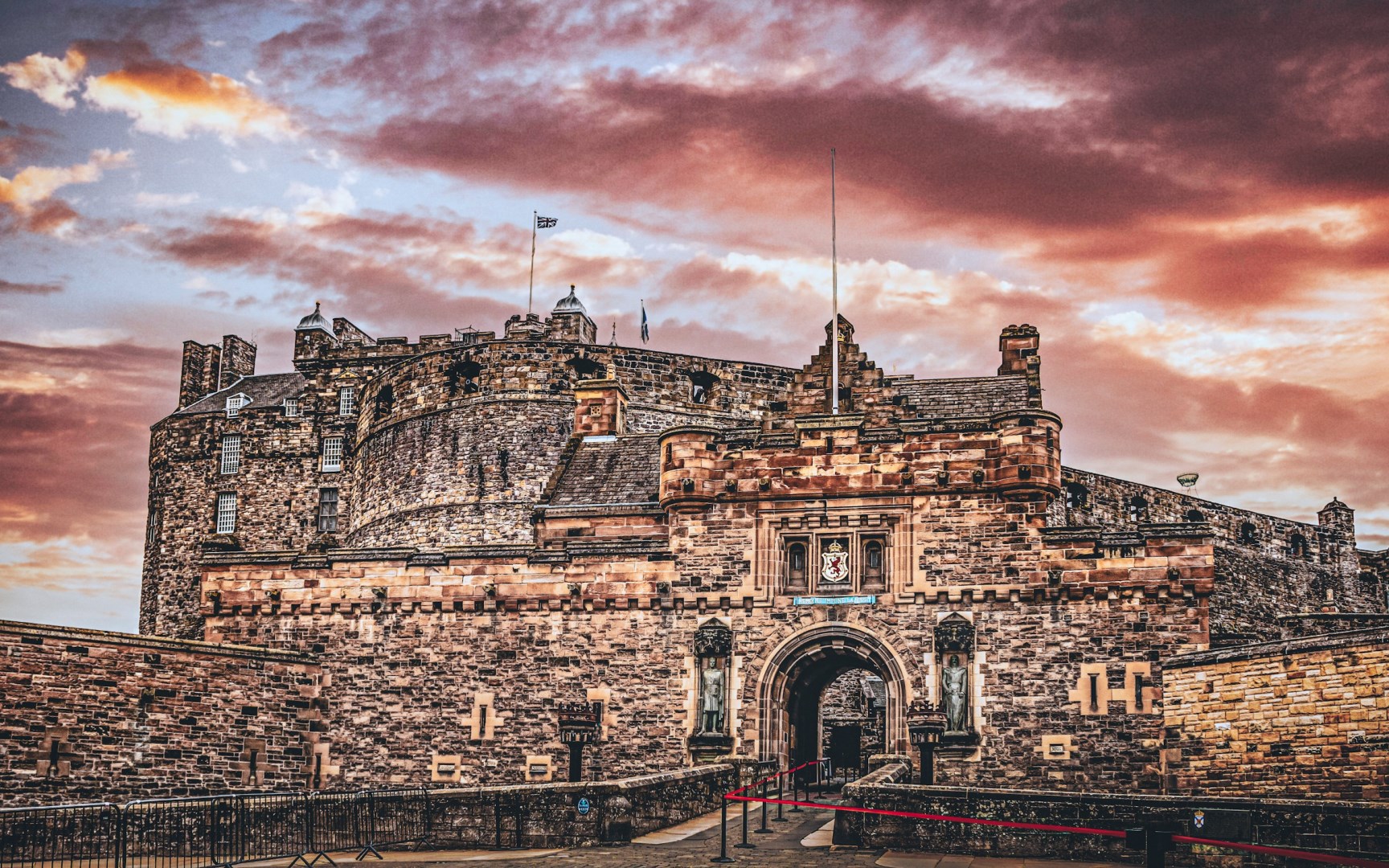
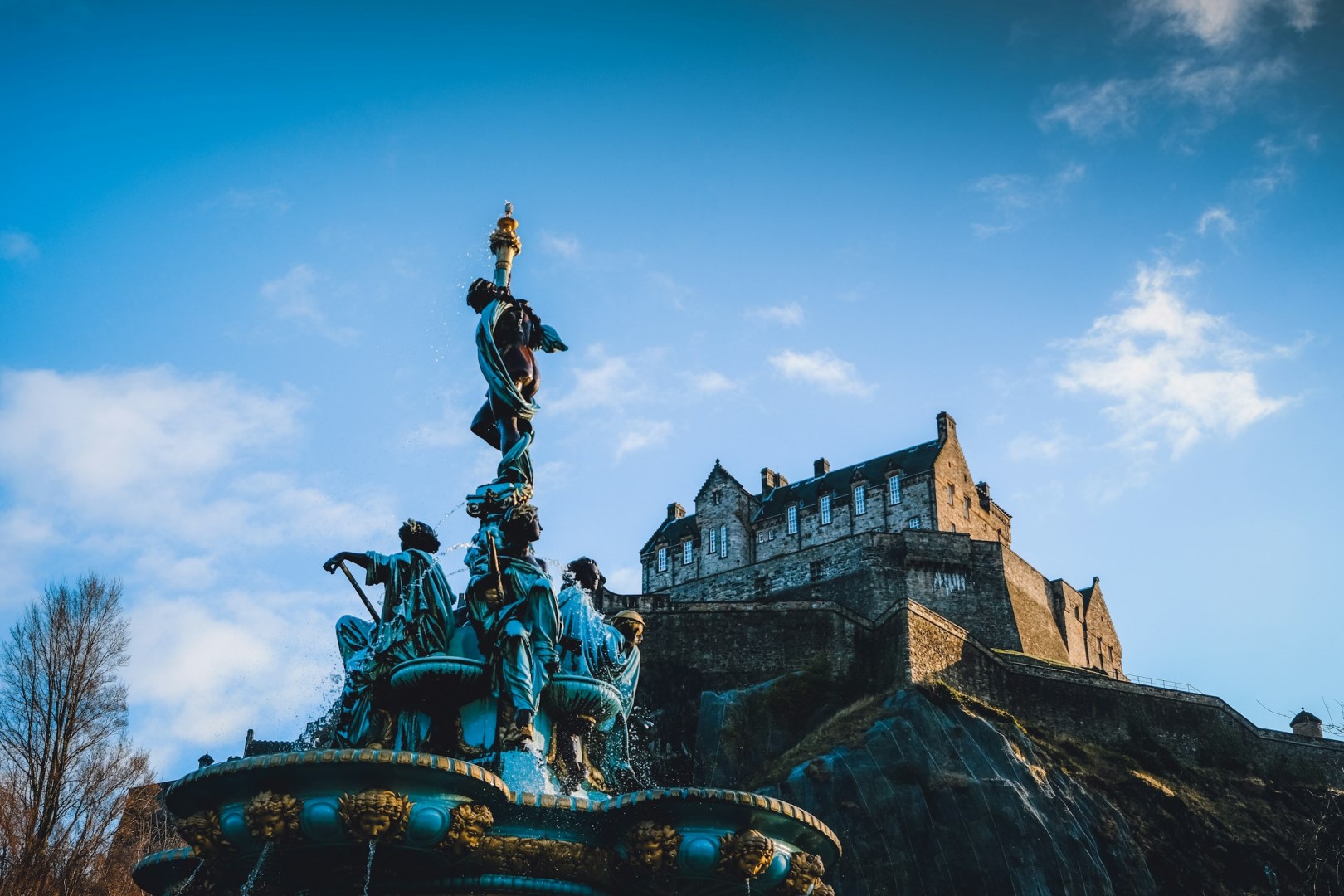
Edinburgh Castle occupies the summit of Castle Rock in the center of Edinburgh, rising above the surrounding Old Town and Princes Street. The fortress is built on a volcanic crag, giving it a prominent position within the city's skyline and making its buildings visible from many parts of Edinburgh. Its complex includes defensive walls, courtyards, military buildings, royal apartments, museums, and memorials. The castle remains one of Scotland's most important historic sites and continues to serve as a ceremonial and military landmark, with the Stone of Destiny and Scottish Crown Jewels among its most significant treasures.
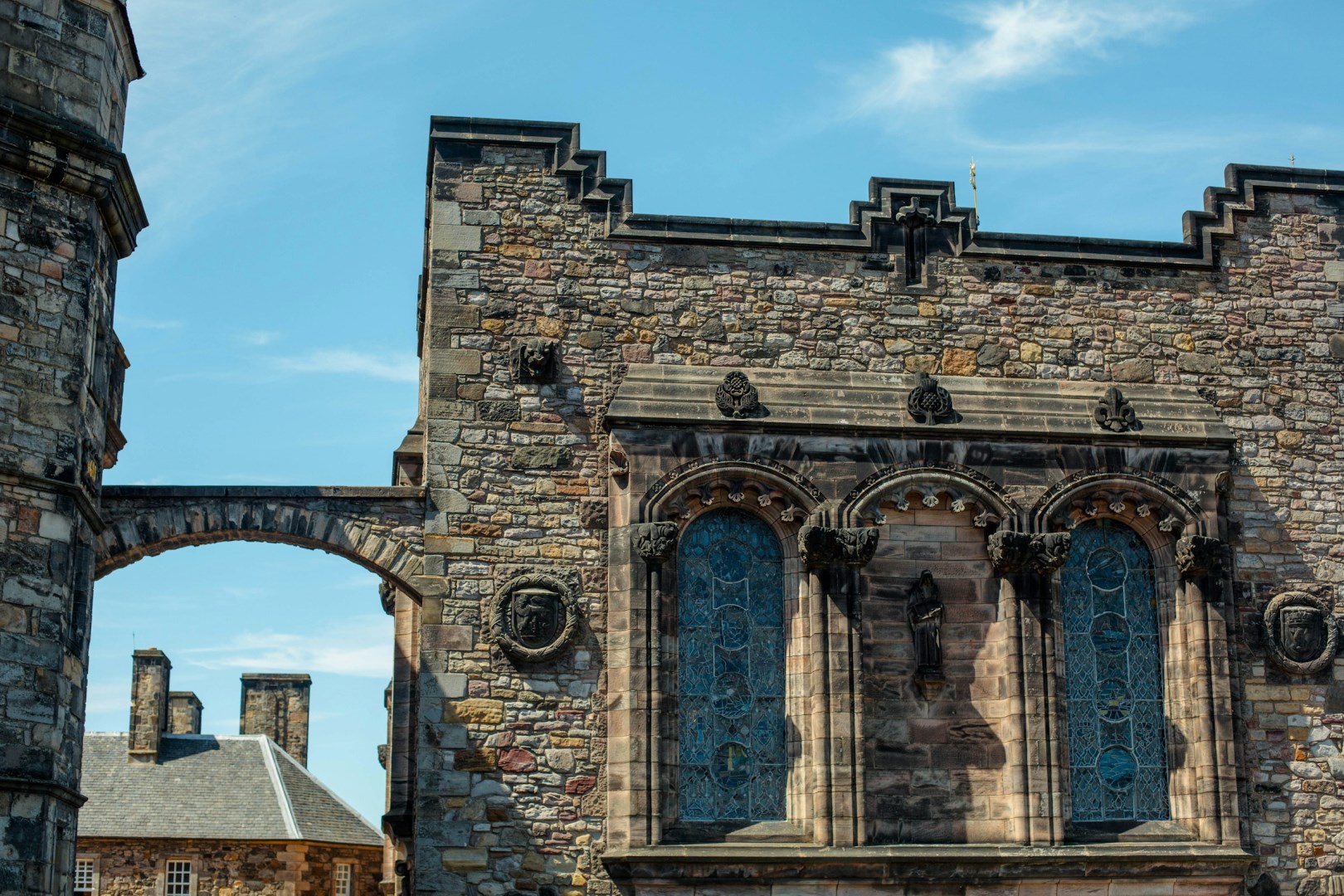
The castle has played an important role in Scotland's royal and military history, with its buildings reflecting changing uses over many centuries. St Margaret's Chapel is the oldest surviving building within the complex and is dedicated to Margaret, Queen of Scots. The Royal Palace contains rooms associated with Scottish monarchs, including the chamber where Mary Queen of Scots gave birth to James VI. The Honours of Scotland, comprising the crown, sceptre, and sword of state, are displayed in the Crown Room alongside the Stone of Destiny. Military traditions remain visible through the One o'Clock Gun and the National War Museum.
Visitors enter through the Esplanade, a broad ceremonial area used for the Edinburgh Military Tattoo, before passing through the castle gates into the fortress. The Half Moon Battery provides views across Edinburgh, while the Argyle Battery overlooks the New Town and Princes Street. The Great Hall contains a large collection of weapons and armor, and the Scottish National War Memorial commemorates Scottish service personnel who died in conflicts. From the castle walls, views extend across the city toward Arthur's Seat, the Firth of Forth, and the surrounding hills, showing how the fortress's elevated position shaped both its defensive role and its relationship with Edinburgh.
The castle's visitor experience centers on architecture, collections, ceremonies, and military heritage rather than local cuisine. The complex contains cafés and places to eat, while the wider Old Town provides access to traditional Scottish dishes and Edinburgh's broader food scene. One of the castle's most distinctive traditions is the firing of the One o'Clock Gun, a daily time signal that continues on most days of the week. The castle also houses the National War Museum and regimental museums, making it an important place for understanding Scotland's military heritage alongside its royal history.
Edinburgh Castle occupies the summit of Castle Rock in the center of Edinburgh, rising above the surrounding Old Town and Princes Street. The fortress is built on a volcanic crag, giving it a prominent position within the city's skyline and making its buildings visible from many parts of Edinburgh. Its complex includes defensive walls, courtyards, military buildings, royal apartments, museums, and memorials. The castle remains one of Scotland's most important historic sites and continues to serve as a ceremonial and military landmark, with the Stone of Destiny and Scottish Crown Jewels among its most significant treasures.
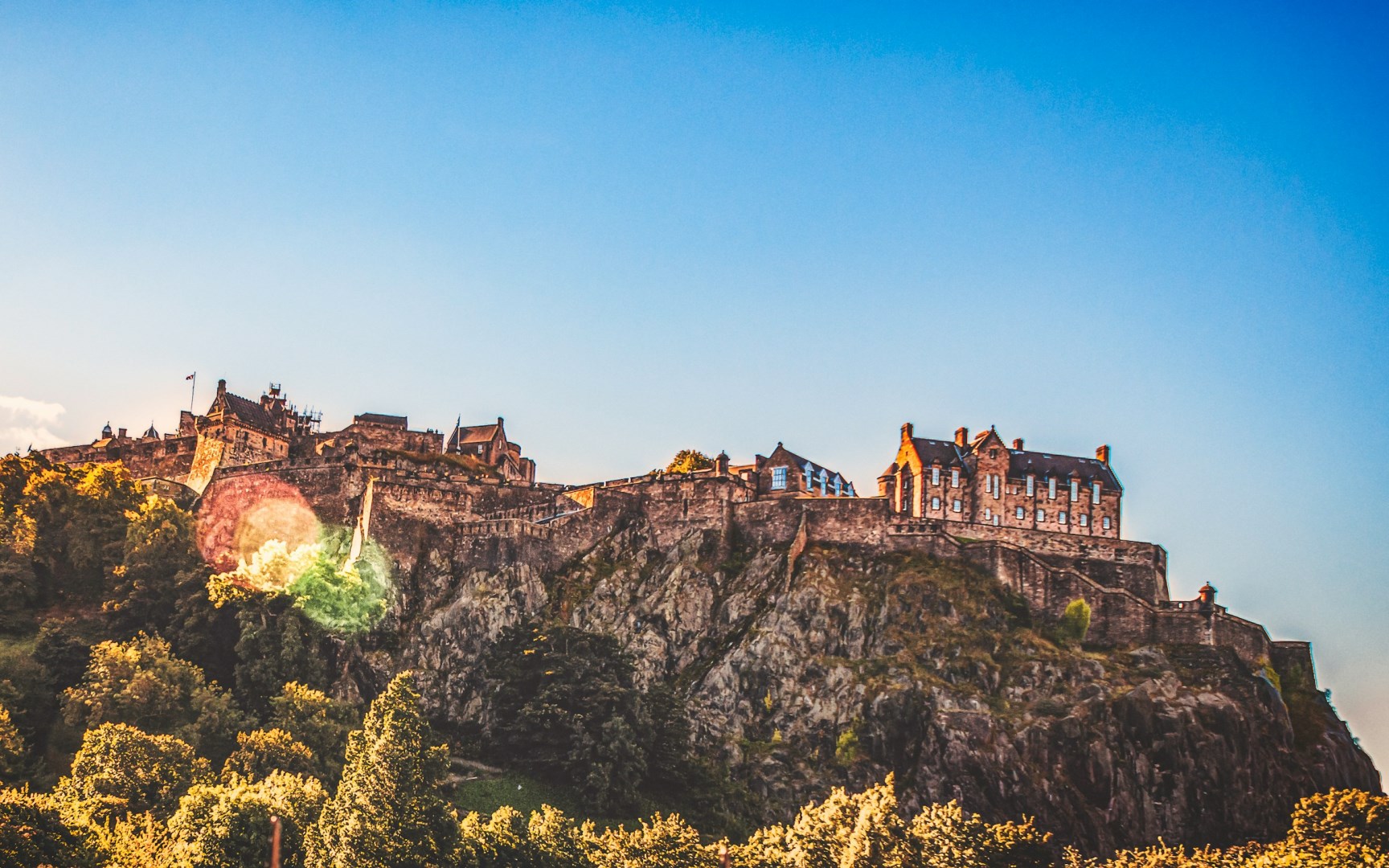
The castle has played an important role in Scotland's royal and military history, with its buildings reflecting changing uses over many centuries. St Margaret's Chapel is the oldest surviving building within the complex and is dedicated to Margaret, Queen of Scots. The Royal Palace contains rooms associated with Scottish monarchs, including the chamber where Mary Queen of Scots gave birth to James VI. The Honours of Scotland, comprising the crown, sceptre, and sword of state, are displayed in the Crown Room alongside the Stone of Destiny. Military traditions remain visible through the One o'Clock Gun and the National War Museum.
Visitors enter through the Esplanade, a broad ceremonial area used for the Edinburgh Military Tattoo, before passing through the castle gates into the fortress. The Half Moon Battery provides views across Edinburgh, while the Argyle Battery overlooks the New Town and Princes Street. The Great Hall contains a large collection of weapons and armor, and the Scottish National War Memorial commemorates Scottish service personnel who died in conflicts. From the castle walls, views extend across the city toward Arthur's Seat, the Firth of Forth, and the surrounding hills, showing how the fortress's elevated position shaped both its defensive role and its relationship with Edinburgh.

The castle's visitor experience centers on architecture, collections, ceremonies, and military heritage rather than local cuisine. The complex contains cafés and places to eat, while the wider Old Town provides access to traditional Scottish dishes and Edinburgh's broader food scene. One of the castle's most distinctive traditions is the firing of the One o'Clock Gun, a daily time signal that continues on most days of the week. The castle also houses the National War Museum and regimental museums, making it an important place for understanding Scotland's military heritage alongside its royal history.
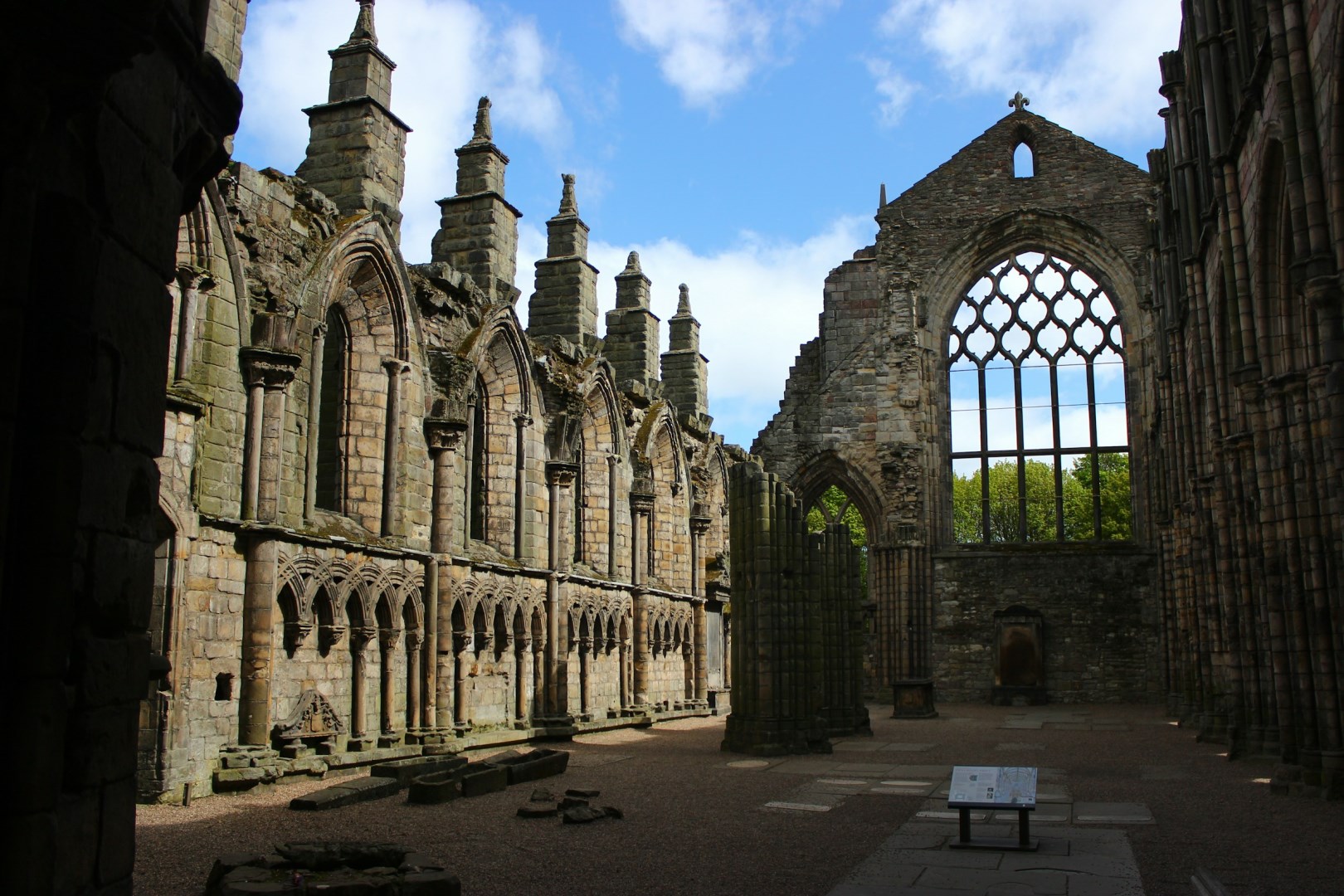
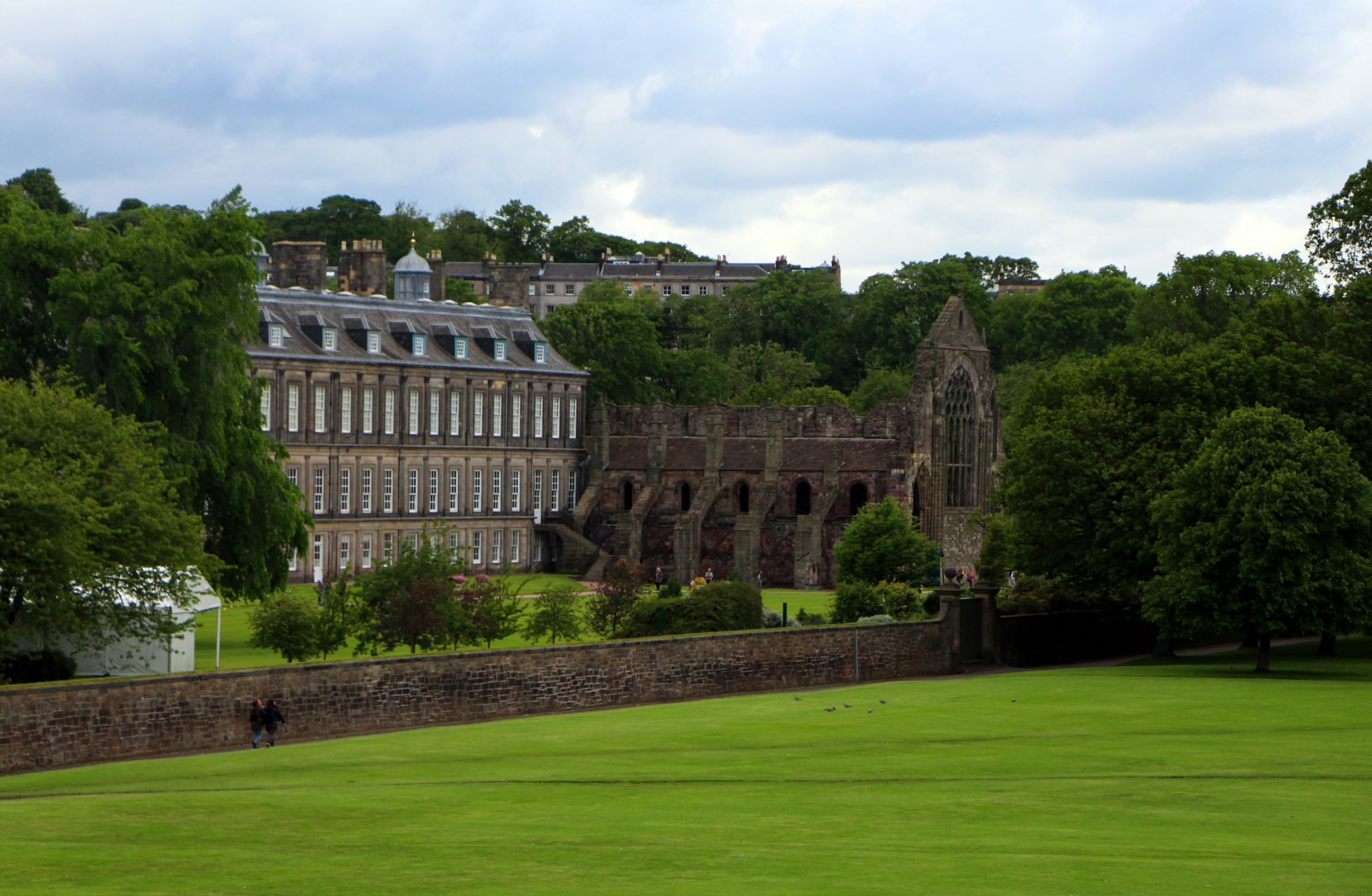
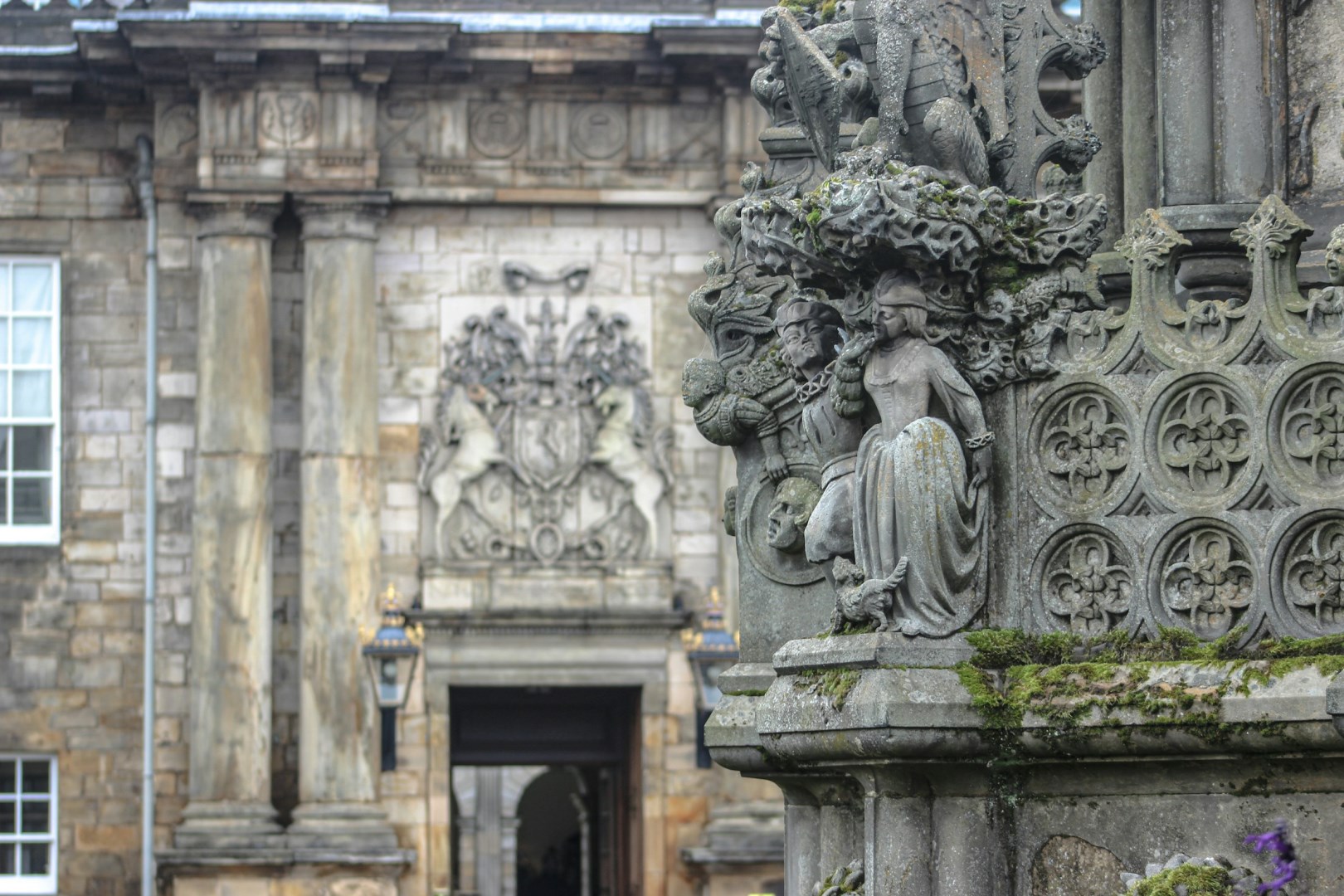
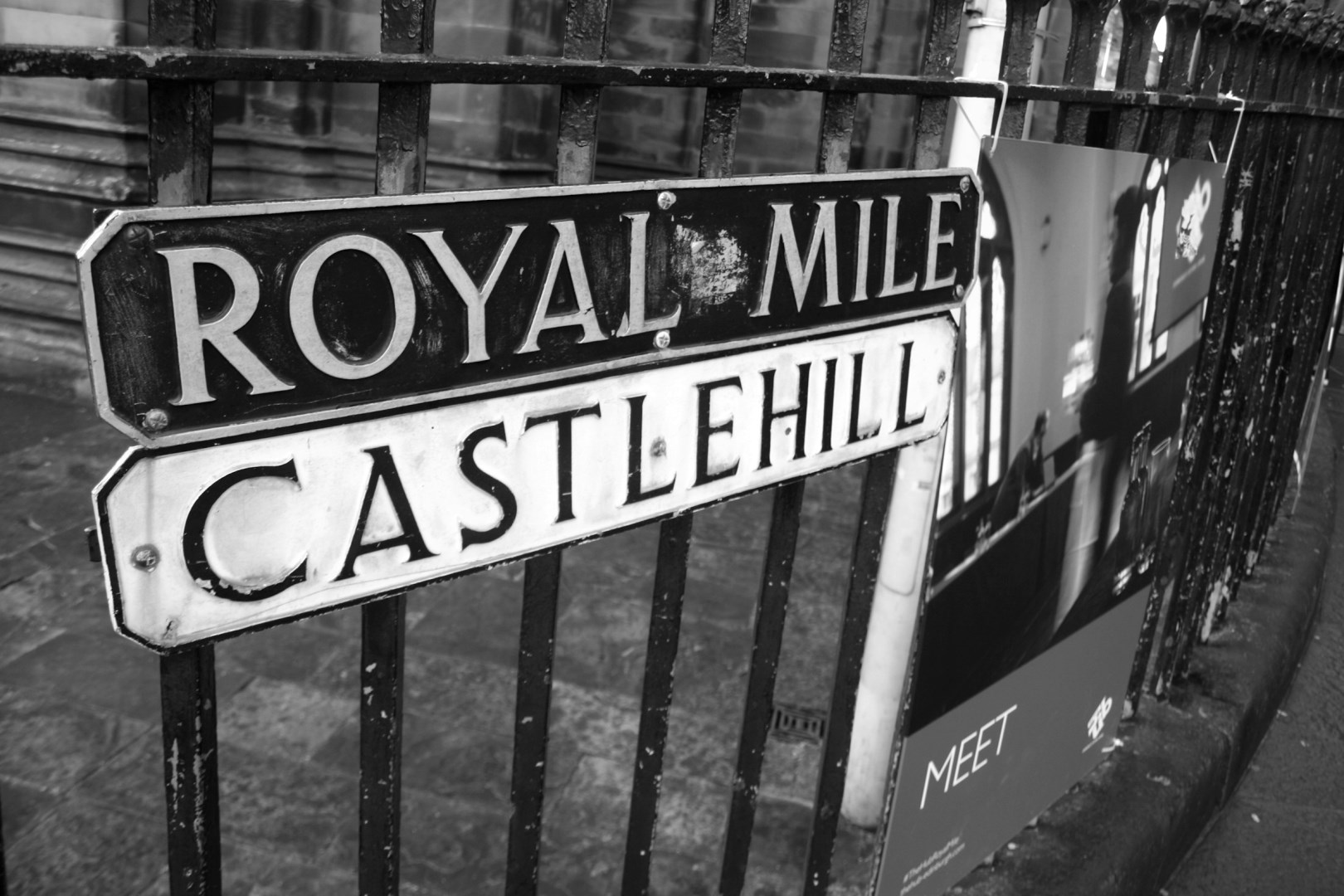
Holyrood Palace, officially the Palace of Holyroodhouse, stands at the eastern end of Edinburgh's Royal Mile beside Holyrood Park. It is the King's official Scottish residence and forms part of a larger complex that includes the palace, Holyrood Abbey, gardens, and historic courtyards. The palace is closely connected with Scotland's royal heritage, while its position at the foot of Arthur's Seat places formal architecture beside open hills and rocky landscapes. Visitors can explore the state apartments, historic rooms, gardens, and the remains of the medieval abbey within the palace grounds.
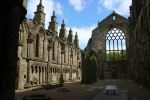
The palace has strong associations with Mary, Queen of Scots, whose apartments survive within the oldest part of the building. The rooms include the bedchamber and adjoining chamber associated with her court, while the palace also contains the Great Gallery, used for formal ceremonies and displaying portraits of Scottish monarchs. Holyrood Abbey stands beside the palace as a roofless medieval church, with its remaining stone walls and arches forming an important part of the site. Royal traditions continue at Holyroodhouse, which is used for official events, ceremonies, and receptions during royal visits to Scotland.
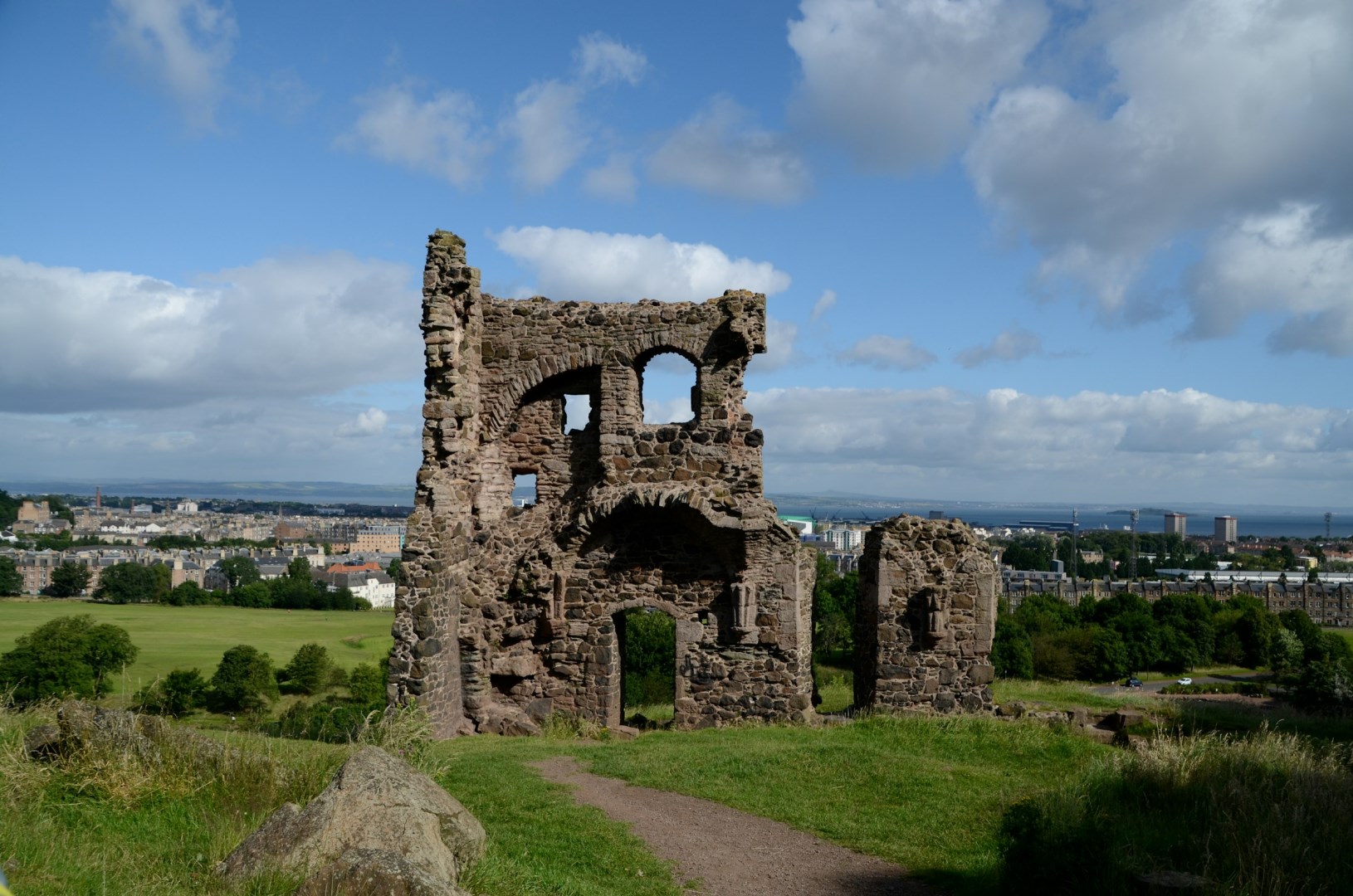
The palace's State Apartments contain elaborate plasterwork, tapestries, furniture, and works of art, with the Throne Room and Great Gallery among the principal interiors. The gardens cover several acres and include formal planting, lawns, and views toward the surrounding hills. Holyrood Abbey occupies the northern part of the grounds, while the palace sits directly beside the Royal Mile, making it an important endpoint for exploring Edinburgh's Old Town. Beyond the palace gardens, Holyrood Park provides access to Arthur's Seat, Salisbury Crags, and other volcanic landscapes that form a dramatic natural setting for the royal complex.
Holyroodhouse does not have a distinct local cuisine of its own, but its role as a royal residence is reflected in its ceremonial spaces, kitchens, gardens, and formal entertaining traditions. The palace gardens contain areas associated with royal recreation and horticulture, while the wider Holyrood area provides access to cafés, restaurants, and Scottish food throughout the Old Town. One of the site's most distinctive features is the contrast between its richly decorated royal interiors and the rugged landscape immediately beyond its walls. The combination of palace, abbey, royal gardens, medieval remains, and volcanic hills makes Holyroodhouse an unusually layered historic site within Edinburgh.